Investing capital wisely is a priority for any organisation seeking sustainable growth and financial resilience. Property has long been viewed as a dependable asset class, particularly during periods of market volatility and inflationary pressure. Within this landscape, new development homes are increasingly attracting the attention of businesses looking to balance predictable returns with long-term value creation, without the complications often associated with older housing stock.
For businesses, property investment is not just about asset appreciation. It is about cash flow stability, operational efficiency and alignment with broader financial planning goals. Modern residential developments meet these criteria in ways that many traditional property investments cannot, making them a compelling strategic choice.
The commercial case for investing in modern housing
New-build residential property is uniquely positioned to support business investment objectives. Designed for contemporary living standards and built to current regulations, these assets tend to outperform older properties in efficiency, desirability and lifecycle costs.
Businesses investing in residential developments benefit from a clearer understanding of risk and return. Construction warranties, predictable maintenance requirements and strong demand fundamentals all contribute to a more transparent investment profile, which is particularly valuable for corporate decision-makers.
Strong demand and rental resilience
Demand for high-quality housing continues to outpace supply across much of the UK, especially in urban centres and regeneration zones. New developments are often located in areas earmarked for economic growth, infrastructure investment and employment expansion.
This sustained demand translates into reliable occupancy rates and competitive rental yields. For businesses seeking income-generating assets, the stability offered by modern housing stock provides a dependable revenue stream that supports long-term financial planning.
Reduced operational and maintenance costs
One of the most significant advantages of investing in newly built homes is the reduction in ongoing costs. Modern construction methods and materials result in fewer repairs, lower maintenance requirements and improved durability over time.
From a business perspective, this means fewer unexpected expenditures and less administrative burden. Predictable operating costs make it easier to forecast cash flow and protect margins, particularly when managing a diversified property portfolio.
Energy efficiency and regulatory alignment
Sustainability and compliance are no longer optional considerations for businesses. Environmental performance now plays a direct role in asset value, tenant demand and regulatory exposure.
New residential developments are built to meet or exceed current energy efficiency standards, reducing utility costs and improving environmental credentials. This alignment with government policy and ESG principles strengthens the long-term viability of the investment.
Future-proofing against legislative change
Older properties often require costly upgrades to meet evolving energy and safety regulations. New builds, by contrast, are designed with future compliance in mind, minimising the risk of sudden capital expenditure driven by legislative change.
For businesses, this future-proofing reduces uncertainty and protects investment value. It also enhances reputational standing by demonstrating a commitment to responsible and sustainable asset ownership.
Capital growth and balance sheet strength
Beyond income generation, property investment plays a vital role in strengthening balance sheets. New developments often benefit from capital appreciation driven by local regeneration, improved infrastructure and population growth.
This appreciation can enhance borrowing capacity, support refinancing strategies and provide additional flexibility for business expansion. As tangible assets, modern homes also offer a hedge against inflation, preserving real value over time.
Strategic diversification for businesses
Property investment enables businesses to diversify away from purely operational or market-dependent income streams. Residential assets, particularly those in high-demand locations, tend to perform independently of short-term economic cycles.
By incorporating new development homes into their investment strategy, businesses can achieve a more balanced risk profile while maintaining exposure to consistent long-term growth.
A practical investment for modern enterprises
In an environment where financial certainty is increasingly difficult to achieve, businesses must prioritise investments that offer clarity, resilience and scalability. New residential developments provide a combination of predictable income, controlled costs and future-ready design that aligns well with corporate financial objectives.
For organisations seeking a dependable property investment that supports both immediate returns and long-term strategy, modern housing developments represent a practical and forward-thinking solution.
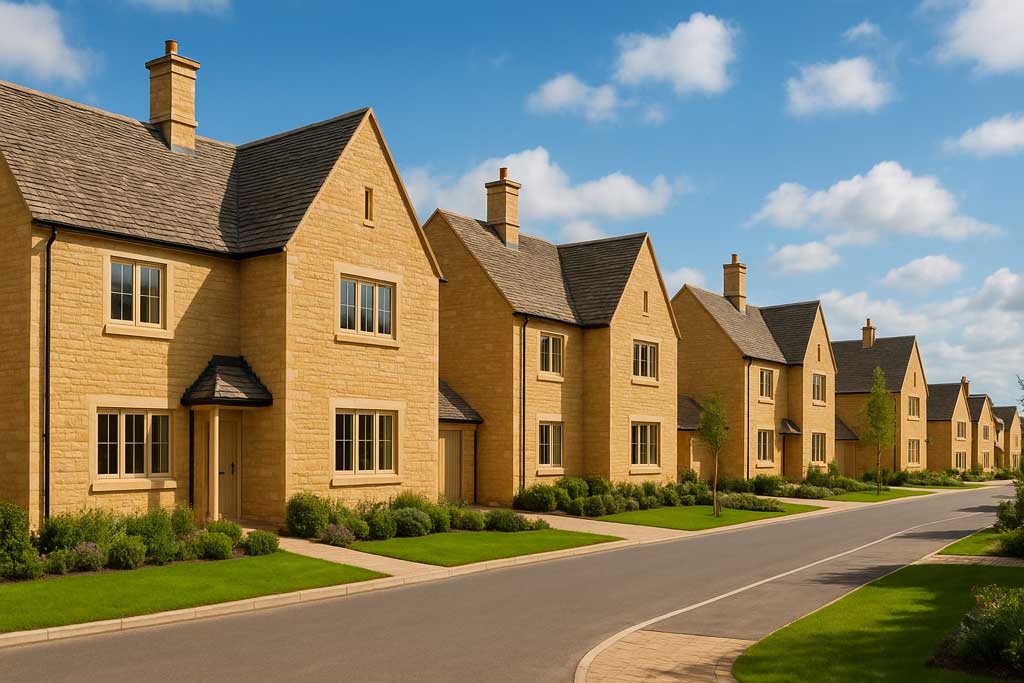
Featured image credit: AI generated.